
Home/Land Clearing
Property & Acreage Reclamation
Land Clearing and Overgrown Property Cleanup in Saratoga County & the Capital Region
Property reclamation means taking land that has gotten away from its owner and making it usable again. I clear brush, invasive growth, trees and stumps, haul away the debris and finish the ground so you can use it.
Immediate response. Fast turnaround. Zero loose ends.
- 5.0 Google rating
- U.S. Army veteran, owner-operated
- $1M general liability, fully insured
- Free local estimates & site visits
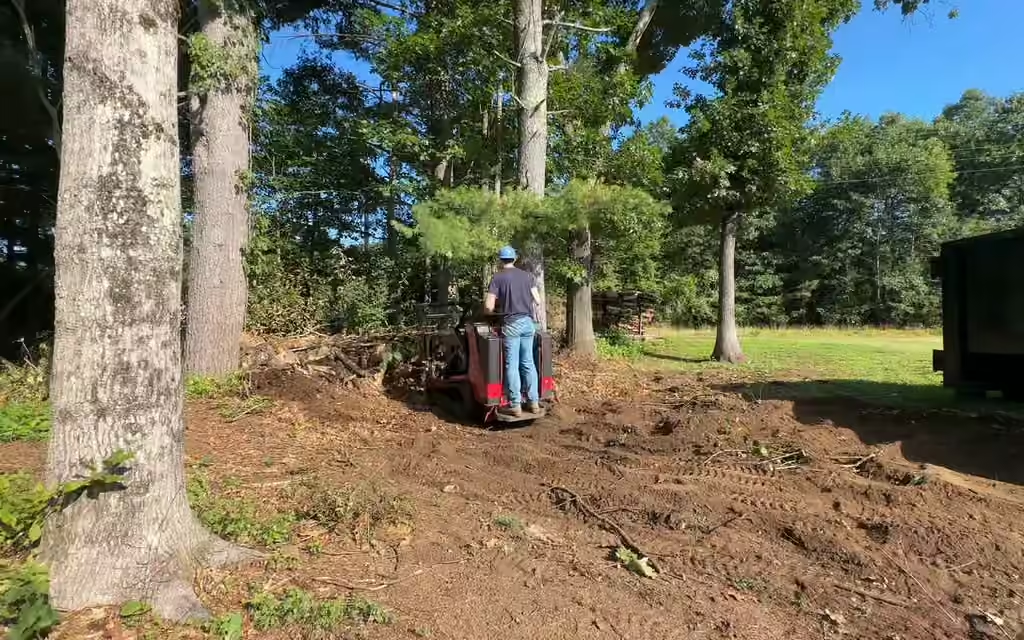
What reclamation looks like
Before and after, from my own videos of the work, and two recent jobs with the numbers behind them.
Before and after
More of my videos on Instagram and Facebook.
Two recent land clearing jobs, by the numbers
Wooded lot, residential property
The job in the first video above. Brush, stumps and woody debris cleared and hauled off an overgrown section of the property, and the owner got usable space back.
Overgrown property on a steep slope
The slope and tight access made a smaller area a substantial project. Acreage alone doesn’t set the work.
Every property is different. Most jobs combine a few of these.
Clearing
Land clearing and brush removal
Brush, saplings and overgrowth cleared from yards, lots and acreage, down to ground you can walk, mow or build on.
Tree removal and stump grinding
Trees taken down, and stumps ground down or pulled out, depending on what the ground is for next.
Storm damage cleanup
Downed trees, broken limbs and storm debris cut up and cleared away, so the property is safe and usable again.
Forestry mulching
Brush and small trees ground up where they stand and left as mulch, when that suits the land better than hauling it away.
Invasive plant removal and control
Japanese knotweed, buckthorn, honeysuckle, multiflora rose, oriental bittersweet, barberry, autumn olive and more. See the full list.
Overgrown shrubs and hedges
Old hedges, overgrown shrubs and foundation plantings taken out, stumps and root balls included.
Brush hogging and field mowing
Fields, pastures and meadows that have grown in, cut back so they can be mowed or used again.
Edges and access
Fence lines and property edges
Fence lines and perimeters cleared so you can see your boundaries and use the land right up to them.
Trails and access paths
Paths opened through wooded or overgrown ground, for walking, equipment or reaching the back of the property.
Debris and structures
Junk and debris on the land
Old fencing, scrap and dumped debris hauled away along with the brush.
Sheds, garages, barns and decks
Old outbuildings, decks and fences taken down and hauled off in the same job. See demolition.
Finishing and landscape installs
Grading and leveling
The ground leveled and smoothed once it’s clear, ready for whatever comes next.
Topsoil and seed prep
Topsoil spread and the surface prepped for grass seed, if you want lawn where the brush was.
Landscape installations
Stone and mulch beds put in, old beds removed or redone, and the ground shaped once it’s clear. One-time installs, not weekly lawn care.
The full list of plants I clear
Invasive shrubs and thickets
Japanese barberry, multiflora rose, autumn olive, common and glossy buckthorn, burning bush, privet, Japanese spirea, wineberry, and Amur, Morrow’s, Tatarian and Bell’s honeysuckle.
Invasive and aggressive vines
Oriental bittersweet, Japanese honeysuckle, porcelain berry, mile-a-minute weed, Japanese hops, black and pale swallow-wort, wintercreeper, English ivy, Chinese and Japanese wisteria, sweet autumn clematis, hardy kiwi and chocolate vine.
Invasive weeds, grasses and spreading plants
Japanese, giant and Bohemian knotweed, garlic mustard, mugwort, Japanese stiltgrass, phragmites (common reed), reed canary grass, purple and yellow loosestrife, lesser celandine, spotted and brown knapweed, Canada thistle, teasel, wild chervil, narrowleaf bittercress, cypress and leafy spurge, Chinese silvergrass and running bamboo.
Aggressive groundcovers and old beds
Goutweed (bishop’s weed), creeping Charlie, pachysandra, vinca, English ivy, lily-of-the-valley, yellow archangel, creeping bellflower and spreading orange daylilies.
Invasive trees and saplings
Tree-of-heaven, Norway and sycamore maple, Amur corktree, white mulberry, black locust, European black alder and Callery (Bradford) pear. Tree size, access and nearby structures set the scope.
Overgrowth and unwanted native growth
Wild grapevine, Virginia creeper, blackberry and raspberry canes, thorny brambles, sumac, goldenrod, tall field grass, dense fern, volunteer trees, suckers, saplings, brush and tangled understory.
Overgrown landscaping
Arborvitae, yews, junipers, boxwoods, lilacs, forsythia, spirea, hydrangeas, rhododendrons, azaleas, ornamental grasses, hedges and foundation plantings, plus dead shrubs, shrub stumps and root balls.
Persistent plants like knotweed call for removal and control: clearing the visible growth once doesn’t guarantee they’re gone. Poison ivy, poison sumac, stinging nettle, wild parsnip and poison hemlock get a separate look before I quote them, and giant hogweed should be reported to DEC.
Where the brush goes
Everything that comes down has to go somewhere. There are three options, and most jobs use more than one.
Mulched in place
What’s left
A layer of wood chips over the cleared ground.
Best for
Wooded lots, trails, fence lines and edges you want to keep natural.
Keep in mind
Chips break down slowly. For lawn, the ground needs grading and topsoil first.
Hauled away
What’s left
Clean ground, with the material gone in containers or dumpsters.
Best for
Lawns, building sites and properties going on the market.
Keep in mind
Disposal is part of the price, so the volume matters.
Staged on site
What’s left
Logs or brush piled where you want them.
Best for
Firewood, or material you plan to use or deal with yourself.
Keep in mind
Anything left on site is yours to use or remove later.
Who calls me for land clearing
Builders and landowners usually know exactly what they want. Plenty of homeowners don’t, and that’s fine: I’ll walk the property with you and explain what needs to happen.
Builders & developers
Clearing a lot to build
Trees and brush cleared for the house, driveway and yard, stumps ground or pulled, debris hauled away and the ground graded.
Realtors, investors & estates
Getting a property ready to sell
The overgrown yard cleared, old sheds and junk gone, and the cleanout inside handled too, so the property is ready to show.
Farms & landowners
Taking back fields and acreage
Fields, pastures and wooded edges that have grown in, cleared and usable again.
Homeowners & new owners
Reclaiming part of the yard
The slope, the back corner or the strip along the woods, cleared and finished so you can use it.
I also work with landlords, property managers and commercial property owners.
Last reviewed October 2026
Rules worth knowing before you clear land here.
A few rules shape what can be cleared, when and how. Here’s the short version, with the source for each. It’s general information, not legal advice: your town and DEC have the final word.
Wetlands
Following an April 2026 court decision, DEC requires a permit for work affecting wetlands it mapped before 2025 or wetlands of 12.4 acres or more (7.4 acres from 2028), including the 100 feet around them. Inside the Adirondack Park, the APA regulates wetlands instead.
DEC: freshwater wetlandsStreams
Work that disturbs the bed or banks of a protected stream needs a DEC permit. DEC’s online map shows how each stream is classified.
DEC: do I need a permit?Burning brush
Banned statewide from March 16 to May 14. The rest of the year, DEC allows it only in towns under 20,000 people and only for limbs under 6 inches across and 8 feet long. Local rules can be stricter.
DEC: open burningTown clearing laws
Some towns regulate large clearing. In the Town of Saratoga, clear-cutting a forested stand of more than two acres needs a special permit from the Planning Board.
Town of Saratoga: Chapter 273An acre or more of soil
Construction that disturbs one acre or more of soil needs coverage under DEC’s stormwater permit, including a stormwater pollution prevention plan. If you’re clearing to build, raise it with your builder or engineer early.
DEC: construction stormwaterBuried utilities
Excavators must notify New York 811 at least two and no more than ten working days before digging, grading or removing tree roots, so buried lines can be marked.
New York 811
How reclamation is priced
Every project is evaluated on its own: how dense the growth is, the scope, the terrain, access and what needs to be disposed of. Acreage alone doesn’t set the timeline or the price.
Estimates and site visits are free locally. For projects farther out, we start with a call to talk through scope, expectations and a general price range. If you’re comfortable with that and the project warrants it, I visit and give you a firmer estimate before any work begins.
What helps me quote it
- Photos or video of the area
- A short description of the result you want
- Approximate size, if you know it
- Slopes, wet areas or tight access
- Whether material should be hauled away, left or staged on site
- Your timing
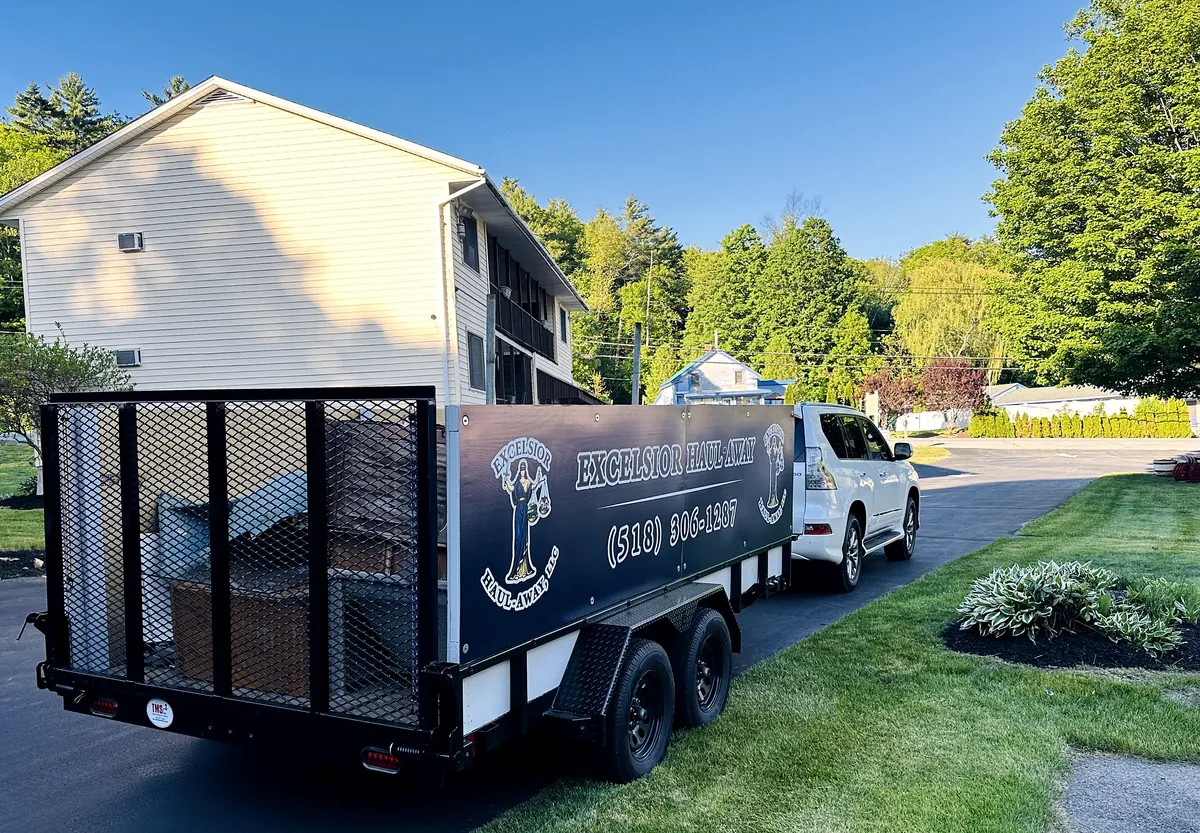
On the job
- Mini and full-size skid steers
- Excavator
- Attachments as needed
- Full line of Stihl handheld equipment
- Utility and dump trailers
- On-site dumpsters
Common questions about land clearing
How much does land clearing cost?
It depends more on how dense the growth is, the terrain, access and disposal than on acreage. A densely overgrown third of an acre can take longer than several acres of lighter growth, so I don’t publish a starting price. Send photos and a short description and I’ll follow up with next steps. Local estimates and site visits are free.
How long does a clearing job take?
Anywhere from a few hours to several days. The two jobs shown above took 5.5 hours of machine work and 14 hours start to finish. Density, slope and access matter more than size, and larger acreage can run several days.
Do you take on small yards, or only acreage?
Both. Smaller projects can be well worth doing depending on the scope, location and equipment needed, so I look at every inquiry individually instead of setting a minimum.
What happens to the brush and debris?
That’s your call. Material can be mulched in place, staged on the property, or hauled away in dumpsters or containers I arrange. The three options are compared above.
Will grass grow back after land clearing?
Where you want lawn, I grade the ground, spread topsoil and prep it for seed. Areas left under a layer of mulch fill in more slowly, so it’s worth deciding up front which parts should become lawn.
Do you clean up storm damage?
Yes. Downed trees, broken limbs and storm debris get cut up and cleared, then hauled away or stacked on site if you want the wood. If a tree or limb is on a power line, stay clear of it and call your utility first.
Do you do landscaping?
One-time installations, yes: stone and mulch beds, old beds removed or redone, and the ground graded and shaped once it’s cleared. I don’t do weekly mowing or lawn maintenance.
Can you get rid of Japanese knotweed and other invasives?
Yes. I handle removal and control of invasives like knotweed, buckthorn, honeysuckle, multiflora rose and bittersweet. Persistent plants like knotweed regrow from roots and fragments, so clearing the visible growth once doesn’t guarantee they’re gone. See the full list of plants I clear.

Mark Conroy, owner & operator · U.S. Army veteran
When you contact Excelsior Haul-Away, you deal directly with me, not a call center, a random crew or a subcontracted team. I take complete accountability and ownership of every outcome.
Why I started“Great service and communication! Mark was able to get the job done very quickly and efficiently. I was looking to get my front yard done for quite some time and Mark was able to make that happen in less than a week! My front yard looks better than ever! Will be hiring in the near future! Thank you!!!”
Service area
Land clearing across Saratoga County and the Capital Region
Saratoga County and nearby parts of Warren, Washington, Albany, Schenectady, Rensselaer, Fulton, Montgomery, Schoharie and Columbia counties.
I clear yards, lots and acreage across the area, from Saratoga Springs, Malta and Wilton to Clifton Park, Glenville, Niskayuna, Colonie and Albany, and north to Corinth, Schuylerville and Greenwich.
For the right project I’ll travel up to about 90 minutes each way, and farther for larger, multi-day jobs.
- Saratoga Springs
- Wilton
- Gansevoort
- Malta
- Ballston Spa
- Ballston Lake
- Mechanicville
- Schuylerville
- Queensbury
- Glens Falls
- Clifton Park
- Halfmoon
- Greenfield
- Galway
- Corinth
- South Glens Falls
- Hudson Falls
- Fort Edward
- Greenwich
- Glenville
- Scotia
- Schenectady
- Niskayuna
- Amsterdam
- Colonie
- Loudonville
- Albany
- Troy
- Lake George
- Bolton Landing
Free estimate
Tell me about the property.
Photos and a short description of what you want done are the best place to start. I’ll look them over and get back to you, typically within the hour.
Prefer to talk? Call or text
(518) 306-1287Text me photosmark@excelsiorhaulaway.com
Open seven days: Mon to Fri, 6 AM to 8 PM; Sat and Sun, 6 AM to 6 PM.